
The Psychology of Short Selling: Part 1
Short selling demands a contrarian mindset that battles loss aversion, anchoring biases, and emotional contagion, psychological forces that can amplify market crashes or expose billion-dollar frauds.
Activ8 Newsroom • December 3, 2025
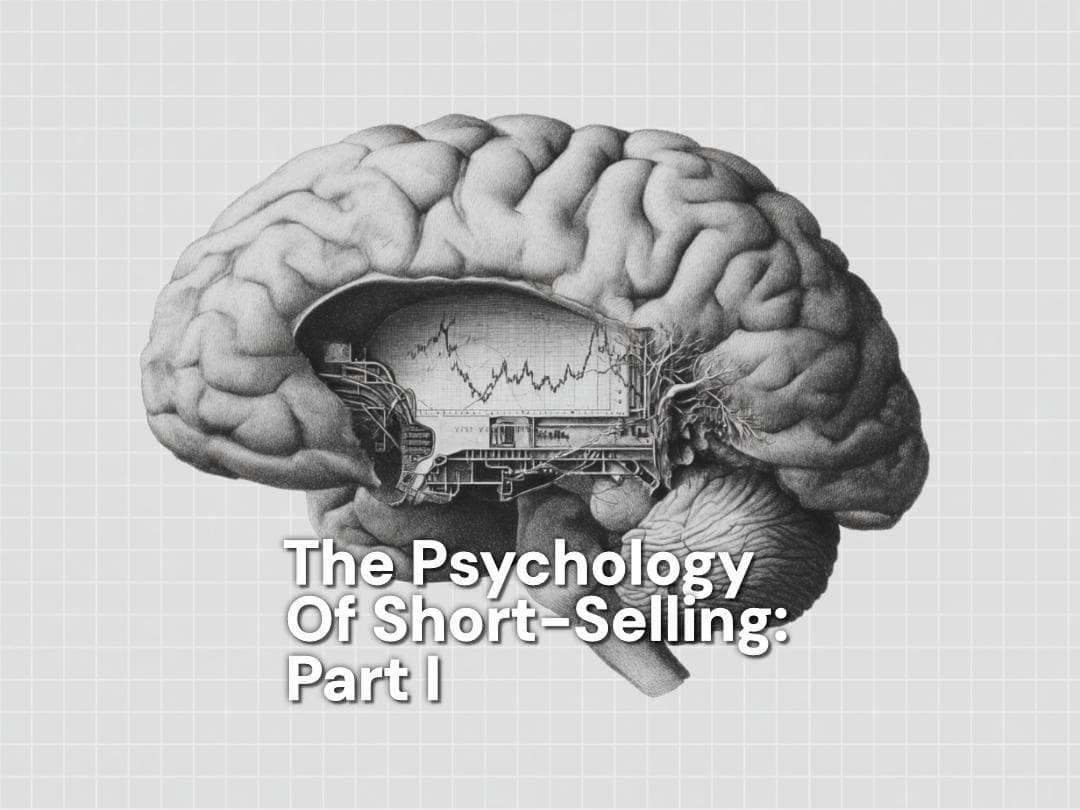
The Psychology of Short Selling: Understanding the Mindset Behind Betting Against the Market
Short selling represents one of the most psychologically complex strategies in financial markets. Unlike traditional investing, where optimism drives decisions, short sellers must embrace pessimism, challenge consensus, and withstand intense social and financial pressure. This article explores the psychological factors, behavioral biases, and cognitive mechanisms that shape short-selling behavior, from individual traders to institutional activists.
Editor's Note: This is Part 1 of our comprehensive series on the psychology of short selling. In this installment, we explore the fundamental psychological mechanisms, behavioral biases, and cognitive dynamics that drive short-selling behavior. Future articles in this series will delve deeper into specific aspects of short-selling psychology, including advanced strategies, institutional dynamics, and evolving market psychology in the digital age.
The Contrarian Mindset: Psychological Profile of Short Sellers
Short selling requires a fundamentally different psychological orientation than traditional long investing. While conventional investors seek companies poised for growth, short sellers hunt for overvaluation, fraud, and failure. This contrarian stance demands unique psychological traits including high conviction in one's analysis, tolerance for being wrong in the short term, and the emotional resilience to maintain positions amid negative sentiment.
Research examining short-seller behavior reveals they tend to be more analytical and less susceptible to certain market anomalies than average investors.[4] However, they are not immune to psychological biases. Experimental studies have demonstrated that even sophisticated short sellers exhibit behavioral patterns that deviate from pure rationality, particularly when facing uncertain outcomes and ambiguous information.[2]
The Nonlinear Psychology: How Emotions Amplify Market Impact
One of the most significant findings in short-selling research is that the psychological impact of short selling on markets is nonlinear rather than linear.[1] The relationship between short-selling behavior and stock price movements doesn't follow a simple cause-and-effect pattern. Instead, it exhibits complex feedback loops and threshold effects driven by market psychology.
During periods of market stability, short selling may have a modest, rational impact on prices, facilitating price discovery and market efficiency. However, when market sentiment shifts to extreme pessimism, the same level of short selling can trigger disproportionate price declines. This nonlinearity stems from emotional contagion and herd behavior, where initial short selling triggers panic, leading more investors to sell, which further validates the pessimistic outlook in a self-reinforcing spiral.[1]
The 2020 Luckin Coffee scandal exemplifies this nonlinear effect. After short sellers exposed financial fraud, the stock didn't just decline; it collapsed, triggering a contagion effect across Chinese concept stocks. The psychological impact extended beyond the individual company, as investors' trust in an entire category of securities evaporated, demonstrating how short-selling psychology can spread through industry correlation.[1]
Behavioral Biases in Short Selling Decisions
Key Concepts: Measuring Short-Selling Behavior
Throughout this section, we'll reference two important metrics that researchers use to measure how short sellers value their positions:
WTAS (Willingness To Accept for Short position): The minimum compensation a trader demands to enter a short position. This represents the price at which they're willing to take on the risk of shorting a stock.
WTPS (Willingness To Pay to close Short position): The maximum amount a trader is willing to pay to exit an existing short position. This represents how much they value getting out of the trade.
The Anchoring Effect
Anchoring represents one of the most persistent psychological biases affecting short sellers.[6] When evaluating potential short positions, traders unconsciously anchor to reference points: historical stock prices, recent highs, or the prices of related securities. These anchors can distort valuation assessments and timing decisions.
Experimental research has revealed that anchoring affects short sellers in specific ways. When short sellers are exposed to high numerical anchors (such as a stock's 52-week high), they tend to price their short positions more aggressively, demanding higher compensation for taking the short position. Conversely, low anchors lead to more conservative pricing.[2] This finding suggests that even sophisticated market participants who are betting against prevailing sentiment remain influenced by arbitrary reference points.
In derivative markets, the underlying asset's price creates a powerful anchor. Short sellers of options or other derivatives must consciously work to evaluate these instruments independently, as the psychological pull of the underlying security's price can cloud judgment about the derivative's true value.
Loss Aversion and the Endowment Effect
Loss aversion (the psychological principle that losses hurt more than equivalent gains feel good) manifests uniquely in short selling.[6] Research has identified an important pricing asymmetry: WTAS (willingness to accept compensation for entering a short position) consistently exceeds WTPS (willingness to pay to close an existing short position).[2]
The WTAS-WTPS Asymmetry: A short seller might demand $60 to enter a position (WTAS = $60), but once in that position, they would only be willing to pay $50 to exit it (WTPS = $50). This $10 gap reveals how psychological attachment distorts rational valuation.
This pricing asymmetry demonstrates loss aversion in action.[2] Once short sellers commit to a position, they value it differently than before entering the trade. The pain of closing a short position at a loss (when the stock rises) exceeds the pleasure of the potential profit by an equivalent amount. This psychological asymmetry can lead short sellers to hold losing positions too long, hoping for a reversal rather than cutting losses rationally.[2]
The Uncertainty Effect
The uncertainty effect describes a peculiar behavioral pattern where individuals demand outcomes that guarantee they cannot lose, even when this leads to suboptimal decisions.[5] In short selling, this manifests as traders pricing positions to ensure positive outcomes regardless of how the underlying security performs.
Experimental evidence shows that when asked to price short positions, many individuals set prices ensuring they profit in all scenarios, effectively demanding compensation that exceeds the worst possible outcome.[2] For example, when short-selling a lottery with a maximum payout of $30, some participants demand more than $30 to enter the position. While this guarantees they won't lose money, it also means they'll never execute the trade at market prices, representing a failure to think probabilistically about risk.
Information Processing and Short-Seller Psychology
The Role of Information Asymmetry
Short sellers often operate with different information (or different interpretations of public information) than the broader market.[7] This information asymmetry creates a unique psychological dynamic. Successful short sellers must trust their analysis even when it contradicts consensus, requiring extraordinary confidence and conviction.
The psychological impact of information asymmetry operates nonlinearly. Initially, when few market participants are aware of negative information, short selling may have minimal price impact. However, as more investors become aware (often triggered by short-seller research reports), the information diffuses rapidly through the market, creating an "explosive" release that can cause dramatic price movements.[1] This pattern reflects how markets process information psychologically rather than instantaneously as efficient market theory suggests.
Emotional Contagion and Herd Behavior
Perhaps no psychological phenomenon in short selling is more powerful than emotional contagion. When prominent short sellers or activist firms publish bearish research, they don't just convey information; they transmit emotion. Fear, skepticism, and urgency spread through market networks, influencing other investors' decisions and behaviors.[1]
This emotional contagion exhibits threshold effects. Below a critical level of short interest, markets may remain calm and rational. But once short selling crosses a psychological threshold (perhaps 20% of float or a high-profile activist report), panic can spread exponentially.[1] The 2015 volatility in Chinese A-shares demonstrated this vividly, as short selling combined with leveraged liquidations created a feedback loop where declining prices triggered more selling, which triggered more declining prices.
The herd effect in short selling creates a dangerous dynamic. Investors observe others shorting a stock and infer that those traders possess negative information, leading them to short as well, regardless of their own analysis. This herding can push prices far below fundamental values, creating the kind of overshooting that behavioral finance predicts but traditional models struggle to explain.[1]
The GameStop Revolution: Retail Psychology Meets Short Selling
The January 2021 GameStop short squeeze represents a watershed moment in short-selling psychology, demonstrating how social media can coordinate retail investor psychology to challenge institutional short sellers. The event revealed several psychological dynamics:
Collective Identity and Social Motivation: Retail traders on Reddit's WallStreetBets organized not just around profit potential but around a shared identity and the emotional satisfaction of inflicting losses on institutional short sellers. The psychological reward of "sticking it to Wall Street" motivated behavior that pure profit-seeking couldn't explain.
Loss Aversion Amplification: As GameStop's price soared, institutional short sellers faced devastating losses. Loss aversion kept many in their positions longer than rational analysis would suggest, hoping for a crash back to fundamental values. Meanwhile, retail traders exhibited a different form of loss aversion: fear of missing out on the historic movement and the social belonging it represented.
Narrative and Belief: The episode demonstrated how powerful narrative can be in market psychology. The story of retail traders beating hedge funds became self-fulfilling, as belief in the narrative attracted more participants, which validated the narrative, attracting still more participants in a psychological feedback loop.
Market Cycles and Psychological Regulation
The psychology of short selling varies dramatically across market cycles, exhibiting what researchers call "nonlinear regulation."[1] During bull markets, short selling faces intense psychological headwinds. Optimism dominates, contrarian positions feel uncomfortable, and short sellers endure both financial losses and social pressure as "betting against success" seems almost un-American.
In bear markets, the psychological environment shifts dramatically. Short selling becomes psychologically easier as pessimism validates bearish positions. However, this creates its own psychological trap: short sellers may become overconfident, failing to recognize when negative sentiment has overshot fundamental values. The transition points between market regimes represent moments of maximum psychological uncertainty, when short sellers must fight their own biased interpretations of ambiguous signals.
Regulatory Psychology and Market Impact
Regulatory interventions in short selling reveal the powerful psychological dynamics between market structure and trader behavior. When regulators impose short-selling bans (as many did during the 2008 financial crisis and 2020 pandemic), they aim to prevent panic.[3] However, these interventions have complex psychological effects.
Short-sale bans can increase market anxiety by signaling that authorities view the situation as dire. They may also create pent-up selling pressure that explodes when restrictions lift.[1] The psychological impact of regulation is itself nonlinear: moderate regulation may enhance market confidence, but excessive or unexpected intervention can trigger the very panic it aims to prevent.
In markets with transparent short-selling disclosure requirements, psychological dynamics shift. Public short interest data can trigger emotional responses from both short sellers and long investors, creating feedback loops. High short interest might attract more shorts (herding) or contrarian longs betting on a squeeze. These competing psychological forces create the volatile, unpredictable dynamics observed in heavily shorted stocks.
The Activist Short Seller: Guardians of Market Integrity
Activist short sellers occupy a unique and vital position in financial markets, serving as independent fraud detectives and market watchdogs. Unlike passive short sellers who quietly profit from declining prices, activist shorts publicly stake their reputations on detailed research reports that expose fraud, accounting irregularities, and corporate misconduct. This public commitment creates a powerful accountability mechanism that benefits all market participants.
The Value Proposition: Fraud Detection and Price Discovery
Research demonstrates that activist short sellers provide substantial value to markets. When major activist short sellers publish reports, target company stock prices decline by an average of 11.2% over three days, and these firms face significantly higher rates of delisting, stock exchange suspension, and bankruptcy.[8] Far from representing market manipulation, these price movements reflect the correction of fraudulent overvaluations that harmed investors.
The track record speaks for itself. Activist short sellers exposed the massive frauds at Enron (James Chanos), Luckin Coffee (Muddy Waters Research), Wirecard (multiple activists), and dozens of other companies where traditional gatekeepers like auditors and regulators failed to detect wrongdoing.[8,9] These firms conduct deep investigative work and fundamental analysis, acting as whistleblowers who denounce corporate fraud, financial misreporting, and flawed business models.[9]
Rigorous Research and Strategic Communication
Analysis of 820 activist short reports reveals that these documents cite an average of 36 pre-existing information sources (such as SEC filings) and 1.6 new information sources from first-hand investigations.[10] This extensive sourcing demonstrates the thoroughness of activist short research. Each additional public source cited correlates with further stock price declines, as markets recognize the credibility of well-documented allegations.[10]
Activist short sellers strategically employ rhetoric to build credibility (ethos), evoke appropriate emotional responses to fraud (pathos), and present logical evidence (logos).[8] This rhetorical sophistication isn't manipulation; it's effective communication that convinces markets to correctly reprice securities that had been fraudulently inflated.
Collaboration with Regulators and Investor Protection
Activist short sellers frequently collaborate with regulatory authorities to protect investors. Research reports by firms like Hindenburg Research and Scorpion Capital have triggered DOJ and SEC investigations, leading to enforcement actions and settlements that return funds to harmed investors.[11] For example, Hindenburg's investigation of Clover Health revealed undisclosed DOJ inquiries regarding illegal kickbacks and deceptive practices, ultimately resulting in a $22 million settlement for investors.[11]
The SEC's whistleblower program has recognized the value of activist short sellers, with these professionals accounting for approximately 40% of recent awards.[12] While some critics argue this represents "double-dipping," the reality is that activist shorts provide information regulators struggle to obtain independently. Securities litigation frequently cites activist short reports as decisive evidence, with courts recognizing their credibility in advancing shareholder claims.[11]
The Psychology of Mission-Driven Short Selling
The psychological profile of successful activist short sellers combines analytical rigor with moral conviction. Unlike purely profit-motivated traders, many activist shorts view their work as a public service. They face unique psychological pressures that shape their decision-making:
Reputational Stakes and Accuracy Incentives: Theory suggests activist short sellers will make generally truthful reports, as a track record for accuracy increases market response to subsequent reports, enhancing trading profitability in repeated interactions.[9] This creates a powerful psychological incentive for honesty. One false report can destroy years of credibility.
Conviction Under Fire: Activist shorts endure intense psychological pressure from target companies, which often respond with aggressive legal threats, public attacks, and even doxing and death threats.[11] Maintaining conviction in one's research while facing such hostility requires extraordinary psychological resilience and confidence in one's analysis.
Confirmation Bias Management: Once activists publish research, psychological commitment to their thesis intensifies. The best activists develop frameworks to continuously reassess their positions and recognize when they're wrong, fighting the natural human tendency to dismiss contradictory evidence.
Mission Versus Money: Many prominent activist shorts express motivations beyond profit. The satisfaction of exposing fraud and protecting investors provides psychological rewards that sustain them through the difficult periods when markets don't immediately validate their research.
Responding to Criticism: Short and Distort Concerns
Critics sometimes allege that activist short sellers engage in "short and distort" manipulation. However, making false statements in research reports carries severe securities fraud liability under SEC Rule 10b-5, and short sellers face defamation lawsuits from target firms.[9] These legal risks create powerful incentives for accuracy.
Research on firm responses to activist short reports shows that when target firms launch internal investigations following reports, they experience significantly higher rates of SEC enforcement actions and stock exchange delistings.[9] This pattern suggests that activist allegations frequently identify real problems, not fabricated ones.
The psychological reality is that activist short sellers cannot afford to be consistently wrong. Markets quickly learn to ignore unreliable sources, eliminating their ability to profit from future research. This market discipline ensures that successful activist shorts maintain rigorous standards of evidence and accuracy.
The Essential Role in Market Ecology
Activist short sellers fill a critical gap in market oversight. When traditional gatekeepers like auditors and regulators fail, activist shorts act as independent detectives examining the dark underbelly of financial markets to find truth behind corporate lies.[11] Their work enhances price discovery, deters fraud, and protects investors from companies that manipulate their financial statements.
The psychological dynamics of activist short selling, from conviction under uncertainty to mission-driven persistence, create a unique breed of market participant. These are not predatory manipulators but rather contrarian truth-seekers willing to endure social isolation, legal threats, and market punishment in pursuit of exposing fraud. The financial markets are more efficient, more honest, and safer for investors because of their work.
Psychological Preparation: What Successful Short Sellers Understand
Elite short sellers develop psychological frameworks to manage the unique mental challenges of their strategy:
Probabilistic Thinking: They think in probabilities rather than certainties, accepting that even well-researched shorts may not work out. This mental framework helps manage the emotional toll of inevitable losses.
Position Sizing for Psychology: Sophisticated shorts size positions not just for financial risk tolerance but for psychological sustainability. Positions large enough to matter financially but small enough to avoid panic during adverse movements.
Emotional Discipline: They recognize that short selling triggers powerful emotions (fear during squeezes, euphoria during crashes) and develop practices to maintain emotional equilibrium. Some use systematic rules to remove emotional decision-making during stressful periods.
Social Resilience: They accept that short selling is often lonely and unpopular, requiring comfort with being a contrarian and sometimes being publicly wrong. Building a peer network of other contrarian thinkers helps manage this social isolation.
The Future of Short-Selling Psychology
Several trends are reshaping the psychological landscape of short selling:
Social Media Coordination: Platforms like Twitter and Reddit enable rapid coordination of both short and long positions, amplifying emotional contagion and herd behavior. The psychological dynamics of trading increasingly involve social identity and belonging alongside profit motivation.
Retail Participation: Democratized access to short selling (through options, inverse ETFs, etc.) brings psychological diversity to markets. Retail shorts may be more susceptible to biases like anchoring and uncertainty effects, creating new market dynamics.
Algorithmic Trading: As algorithms execute more short-selling activity, the psychological component might seem to diminish. However, algorithms are programmed by humans with their own biases, and algorithmic behavior can trigger psychological responses in human traders, creating complex human-machine psychological interactions.
Conclusion: Embracing Psychological Complexity
Understanding the psychology of short selling reveals that markets are fundamentally human systems where emotion, bias, and social dynamics shape outcomes as much as fundamentals and information. Short selling amplifies these psychological forces because it runs counter to natural optimism, challenges social norms around supporting success, and creates adversarial dynamics between market participants.
The nonlinear psychological effects documented in research (threshold effects, emotional contagion, feedback loops) demonstrate that simple models of rational behavior fail to capture market reality.[1,2] Successful short sellers must understand not just company fundamentals and market mechanics, but human psychology in all its messy complexity.
For the activist short-selling community, these psychological insights suggest several imperatives: First, develop self-awareness about one's own biases and emotional triggers. Second, recognize that markets process information through psychological channels that can create non-rational outcomes in the short term. Third, build psychological resilience to withstand the unique stresses of contrarian investing. Finally, maintain intellectual humility by accepting that even the best psychological and fundamental analysis cannot guarantee success in markets driven by the unpredictable psychology of human participants.
As markets evolve, the psychology of short selling will continue to be a critical factor determining outcomes. Understanding these psychological dynamics isn't just academically interesting; it's essential for anyone seeking to navigate the complex, emotionally charged world of betting against the market.
Sources
- Liu, C. (2025). Analysis of the Nonlinear Impact Mechanism of Short Selling Behavior on Stock Price Fluctuations. Global Media and Social Sciences Research Journal, 6(1), 288-294.
- Eskinazi, N., Shavit, T., Rosenboim, M., & Malul, M. (2023). Behavioral biases in short selling: An experimental study. Managerial and Decision Economics, 1-10.
- Beber, A., & Pagano, M. (2013). Short-selling bans around the world: Evidence from the 2007-09 crisis. The Journal of Finance, 68(1), 343-381.
- Dechow, P. M., Hutton, A. P., Meulbroek, L., & Sloan, R. G. (2001). Short-sellers, fundamental analysis, and stock returns. Journal of Financial Economics, 61(1), 77-106.
- Gneezy, U., List, J. A., & Wu, G. (2006). The uncertainty effect: When a risky prospect is valued less than its worst outcome. Quarterly Journal of Economics, 121(4), 1283-1309.
- Kahneman, D., & Tversky, A. (1979). Prospect theory: An analysis of decision under risk. Econometrica, 47(2), 263-292.
- Miller, E. M. (1977). Risk, uncertainty, and divergence of opinion. The Journal of Finance, 32(4), 1151-1168.
- Paugam, L., Stolowy, H., & Gendron, Y. (2021). Deploying narrative economics to understand financial market dynamics: An analysis of activist short sellers' rhetoric. Contemporary Accounting Research, 38(2), 1186-1220.
- Brendel, J., & Ryans, J. (2021). Responding to activist short sellers: Allegations, firm responses, and outcomes. Journal of Accounting Research, 59(2), 413-457.
- Bradshaw, M. T., Huang, A. G., & Tan, H. (2024). Short sellers' information acquisition: Evidence from interviews with activist short sellers and analyses of short reports. Working paper.
- Labaton Keller Sucharow. (2024). Activist Short-Sellers Are the Dark Knights of Wall Street. News & Insights.
- Institutional Investor. (2024). Activist Short Sellers Are the SEC's Biggest Whistleblowers. Corner Office.
More in News

Consolidation Comes to Activist Short Selling
A landmark acquisition, back-to-back collaborative reports, and interviews with investigators point to a shift in how activist short selling gets done.
Activ8 Newsroom • July 7, 2026
The Citron Scorecard: How Andrew Left’s Targets Actually Traded
A great deal has been written about the man. Far less has been written about the numbers. We pulled every Citron Research call in our database and measured what happened to the stocks.
Activ8 Newsroom • June 23, 2026
Activist Short Selling After the Andrew Left Decision: Pt 1
Andrew Left was convicted for trading against his own calls, not for his research, and what the verdict really changes for activist short selling will not be settled until the appeal.
Activ8 Newsroom • June 4, 2026